Consultation and Focus Groups
Professional Facilitation for Stakeholder Consultations and Focus Groups
Effective consultation is only possible when every voice is heard. Whether you are engaging the public, your employees or a diverse group of stakeholders, you need a structured process that captures accurate, balanced feedback—not just the loudest opinions in the room.
Our facilitation team specialises in designing and running stakeholder consultations, focus groups and public engagement events that generate reliable insights and reduce the risk of conflict or bias. Recent clients include the Environment Agency and CEOI, who trusted us to bring together wide‑ranging perspectives in both virtual and in‑person settings.
Why Organisations Choose Independent Facilitation
Poorly designed consultation can lead to poor decisions. A professional, neutral facilitator helps ensure:
- Balanced participation, so quieter voices feel safe to contribute
- Evidence‑based insights, not skewed feedback
- Constructive conversations even when views differ
- Clear outputs you can use for strategy and decision‑making
As GWR found, structured facilitation can generate richer feedback:
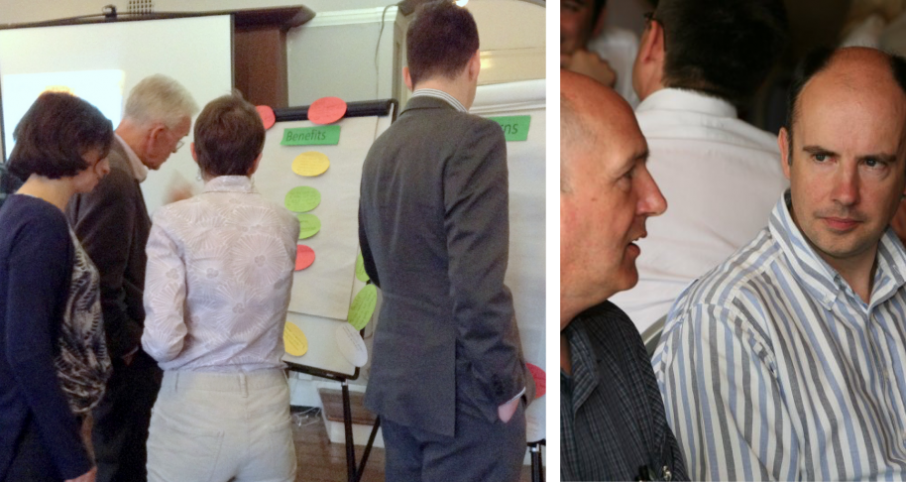
“The use of small breakout groups, post‑its, stickers, posters and other visual aids kept the participants engaged and interested, which meant we received informal and beneficial feedback"
Designing Effective Stakeholder Engagement
We start by understanding what you need to find out from people. Then we design the consultation—questions, activities and group structure—to ensure meaningful dialogue.
Our processes are ideal for:
- Focus groups
- Stakeholder workshops
- Public consultations
- Employee engagement sessions
- Early-stage research engagement
For example, our recent collaboration with the University of the West of England supported stakeholder engagement before a funding call, helping researchers refine ideas and strengthen relationships.
“Wonderful to make new connections and hear new ideas. Very inspiring.”
Rich, Actionable Consultation Findings
Every session is facilitated, recorded and analysed so you receive evidence you can trust. Your consultation report includes:
- A clear executive summary
- Qualitative insights from group discussions
- Quantitative data where appropriate
- Summary of key conclusions from the sessions
As the UK Life Study team said:
We often work with a visual reporter to provide a visual summary of the discussions which can be very helpful in stakeholder reporting. A recent example of a visual report was our focus group for working people also caring for elderly parents commissioned by Carents with Laura Evans from Nifty Fox.“The feedback we received from your team was comprehensive and detailed… we could fully understand where the conclusions had been drawn from.”
In‑Person or Online?
We design and run consultation processes in a format that best works for you and your stakeholders, and this can be virtual formats or in person:
- Government bodies and public sector organisations
- Research teams and universities
- Environmental and infrastructure projects
- Businesses/organisations seeking staff or customer insights
From single focus groups to large multi‑stakeholder consultations, we create spaces where people feel heard and where reliable evidence emerges. We encourage a wide diversity of views to be captured, including the important voices that might dissent from the consensus.
Plan Your Next Consultation With Confidence
If you’re preparing a consultation process and want it to be engaging, inclusive and evidence‑rich, we’d love to help.
Contact us to discuss your aims, and we’ll create a tailored proposal—no obligation.
Frequently Asked Questions
We know that inviting us to work with you on a stakeholder consultation can feel risky, these are some of the questions that we often get asked, and we hope our responses will give you confidence that we will add value
1. What does a professional facilitator do in a stakeholder consultation?
A professional facilitator creates a neutral, structured environment where every participant feels able to contribute. They guide discussions, manage group dynamics, and ensure the consultation captures balanced, evidence‑based feedback rather than just the views of the most vocal participants.
2. Why should we use an independent facilitator instead of running consultations ourselves?
Using an independent facilitator helps reduce bias, prevent conflict and increase trust among participants. Facilitators bring tested consultation methods, help quieter voices be heard, and ensure that the insights you gather are reliable and representative.
3. Do you run both virtual and in‑person consultation events?
We facilitate consultations online and in person, using approaches that work equally well across both formats—such as small‑group discussions, visual tools and structured activities. This ensures consistent engagement no matter where participants are located
4. How do you make sure quieter voices are heard in stakeholder engagement sessions?
We use techniques like small breakout groups, individual reflection tasks and visual prompts. These methods create space for thoughtful contributions and prevent the conversation from being dominated by louder or more confident participants.
5. What is included in your consultation analysis and report?
The format of the report is based on what output you need captured. Typically, a report will include: a clear executive summary, qualitative insights and quantitative data where appropriate. This ensures you have evidence you can confidently use to inform decisions or shape strategy.
6. Can you help design the consultation process as well as run it?
Yes. We support the full process—planning the engagement, designing consultation questions, structuring activities, facilitating the sessions and analysing the results. We can also advise on timelines and participant communication. You will handle participant recruitment, venue booking and will be the communication hub with the participants.